Kitchen Remodeling for Older Homes in Thousand Oaks, CA
Quick Take: Older homes in Thousand Oaks are full of charm. But they come with surprises behind the walls that newer homes don’t. The right contractor finds those problems early and plans around them, so your kitchen remodel stays on track from start to finish.
A lot of homes in the Conejo Valley were built between the 1970s and early 1990s. These are solid homes in good neighborhoods, and most families who live in them plan to stay. The kitchens, though, tell a different story. They were built for a different era, and it shows.
Outdated wiring, old pipes, and cramped layouts are common. That doesn’t make a remodel impossible. It just means you need a contractor who knows what to look for before the work begins.
What Sets Older Homes Apart Before Demolition Starts
Picking out cabinets and countertops is the easy part. In a home built before 1990, what’s behind the walls often matters more. That’s where the real decisions get made.
California’s building standards have changed a lot over the past 40 years. Walls that look fine from the outside might be load-bearing. Subfloors can be uneven from decades of settling. These aren’t reasons to walk away from a remodel. They’re reasons to plan carefully before anything gets torn out.
A design-build process catches this stuff early. Design and construction happen under one roof, so problems show up on paper instead of mid-demo. Homeowners starting a kitchen remodeling project in Thousand Oaks get a much smoother experience when that coordination happens from day one.
Electrical and Plumbing Upgrades You Should Plan For
Older homes weren’t built for modern appliances. A refrigerator, dishwasher, microwave, and range all running at once can overload a system that was never designed to handle it. Before any cabinets go in, both electrical and plumbing need a hard look.
These are the upgrades that come up most often in Thousand Oaks homes from this era.
- Knob-and-tube or aluminum wiring: This shows up in homes built before the mid-1980s. It doesn’t meet today’s code for kitchen circuits and has to be replaced.
- Undersized electrical panels: A 100-amp panel can’t keep up with a modern kitchen. Most remodels need an upgrade to 200 amps.
- Galvanized steel pipes: They corrode from the inside out over time. A kitchen remodel is a good opportunity to repipe while the walls are already open.
- Missing exhaust systems: Older kitchens often had no real ventilation. Current code requires it on any permitted remodel.
Knowing about these ahead of time keeps the budget honest. Surprises mid-project are always more expensive than planned upgrades.
How to Budget for an Older Home Kitchen Remodel
Older home remodels cost more than most people expect. Not because contractors charge more, but because the starting point is different. There's more to assess, more to bring up to code, and more that can turn up once the walls come open.
A standard kitchen remodel budget usually includes a contingency of around 10%. For a home built before 1990, that number should be closer to 15 to 20%. That cushion exists for a reason. Finding galvanized pipes or outdated wiring mid-project isn't unusual. Having budget set aside for it means the project keeps moving instead of stalling.
The line items most likely to shift are electrical, plumbing, and subfloor work. These are the areas you can't fully assess until demolition begins. Everything else, cabinets, countertops, fixtures, can be priced accurately upfront. A good contractor gives you a detailed proposal that separates the known costs from the ones that depend on what's found. That kind of clarity makes the whole process easier to manage.
Honoring Your Home’s Original Character
Older homes have details that newer builds just don’t. Wood trim, cabinet profiles, tile patterns. Updating the kitchen doesn’t mean you have to lose any of that.
When to Preserve vs. When to Update
The answer usually comes down to two things: condition and function. Original trim in good shape is worth keeping. A cabinet box that’s warped or structurally weak isn’t. We look at each element on its own merits rather than replacing everything by default.
Material Choices That Bridge Old and New
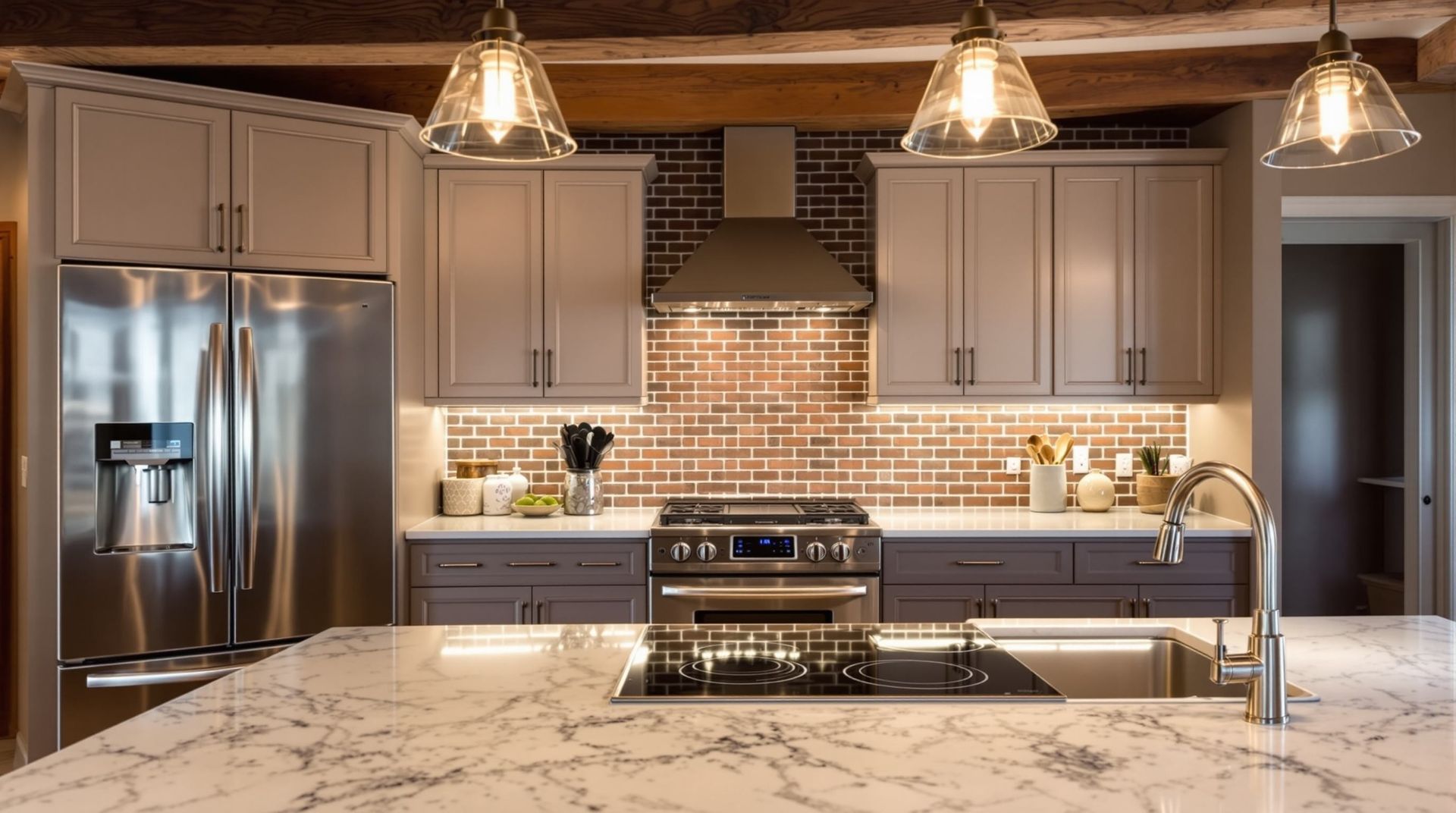
Shaker-style cabinets fit naturally in homes from this period. They feel current without looking out of place. Quartz countertops in warm tones work well alongside older wood trim without a clash. Our kitchen design services in Thousand Oaks are built around exactly these kinds of choices. Seeing real kitchen cabinet samples in our showroom makes it easier to land on something that actually fits the house.
Layout Changes Older Kitchens Actually Need
Kitchens built in the 70s and 80s were designed for one person. One cook, one workflow, everything tucked against the walls. That setup doesn’t work well for how most families actually use a kitchen today.
Two people need room to move. Industry standards call for 42 to 48 inches of clearance between facing counters. The path between your sink, stove, and refrigerator should flow without backtracking. Most older layouts need some reworking to get there.
Opening a wall is one of the most common changes we make. It connects the kitchen to the rest of the house and makes the whole space feel bigger. Before any wall comes down, we check whether it’s load-bearing and what’s running through it. That happens during the design phase, not mid-demo.
Permits and Timelines in Thousand Oaks
If a remodel touches electrical, plumbing, or structure, it needs permits in California. That covers most older home kitchen remodels. Skipping permits looks like a shortcut until you go to sell the house or make an insurance claim.
- A few things affect how long permitting takes in the Conejo Valley:
- Scope of structural changes: Moving or removing load-bearing elements requires an engineering review. That adds time to the permit process.
- HOA requirements: Some Thousand Oaks neighborhoods have a separate review layer that runs alongside the city process.
- Older home documentation: Homes from this era sometimes don’t have updated site plans on file, which slows the application down.
Start to finish, plan for 9 to 14 weeks on an older home kitchen remodel. That includes design, permitting, and construction. The permit phase alone runs 2 to 4 weeks in most cases. Going in with realistic expectations makes the whole process easier to live through.
What to Look for in a Contractor for an Older Home
Experience with older homes is not the same as general remodeling experience. Pre-1990 construction has its own set of quirks. A contractor who has seen them before handles them differently than one who hasn’t.
Ask direct questions. Have they replaced knob-and-tube wiring before? Have they opened load-bearing walls? What happens when something unexpected turns up mid-project? How that conversation goes during the estimate tells you a lot about how the job will go.
Check licensing, insurance, and real client reviews. Not testimonials on a company’s own website. Third-party surveys you can actually read. We have been remodeling homes in the Conejo Valley since 1985. Our client satisfaction results are tracked independently through GuildQuality and posted publicly. A lot of families who come to us for a kitchen end up looking at bathroom remodeling in Thousand Oaks too, once they see how the process works.
Conclusion
Older homes in Thousand Oaks are worth investing in. The neighborhoods are established, the architecture has personality, and a well-done kitchen remodel adds real value to both the house and daily life. The work just takes more planning than a remodel on a newer build.
If your kitchen is ready for an update, we’d be glad to take a look and talk through what the project would involve.