Kitchen Remodeling in Thousand Oaks, CA: Storage Design
Quick Take: Most Thousand Oaks kitchens were built decades before today's families started storing air fryers, bulk pantry hauls, and a countertop appliance for every occasion. Smart storage design fixes that without requiring more square footage. A storage-focused kitchen remodel in this area runs anywhere from $30,000 to $75,000 depending on scope, cabinetry, and what turns up behind the walls.
Thousand Oaks homes are solid, established, and full of potential. Most kitchens in this area were designed in the 1970s, 80s, and 90s, when families cooked differently and owned far less. The cabinets made sense then. They don't always make sense now.
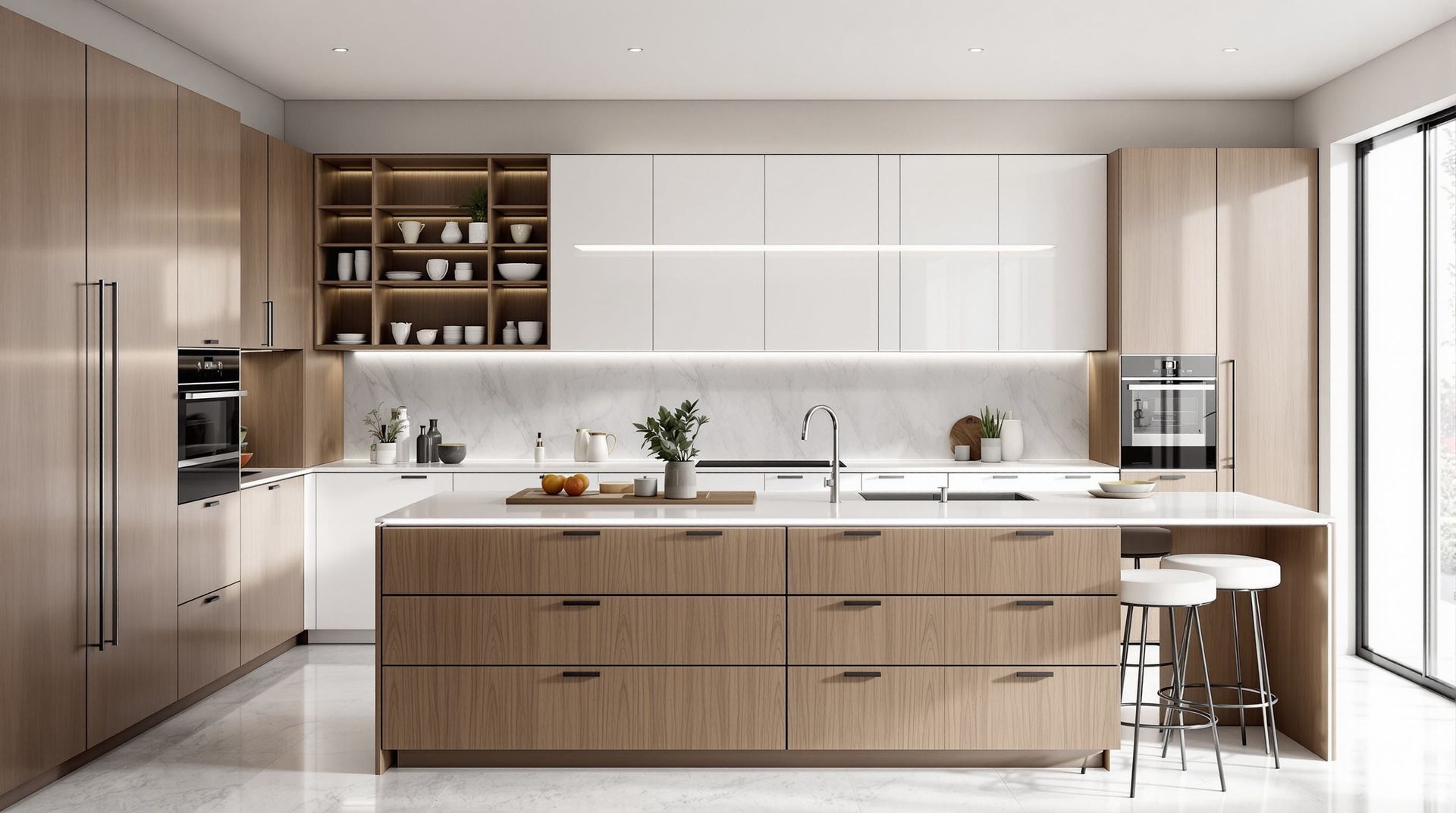
A kitchen remodel gives you the chance to fix that from the ground up. Good storage design isn't about cramming in more cabinets. It's about putting the right storage in the right places so your kitchen actually works for the way your household runs every day.
Why Older Thousand Oaks Kitchens Run Short on Storage
Most homes in Thousand Oaks were built between the 1970s and 1990s. Kitchen layouts from that era followed a simple pattern. Upper cabinets, lower cabinets, and a small pantry if you were lucky. That was enough for the time. It rarely is now.
Today's households stock more. Bulk shopping, specialty appliances, and bigger families mean the average kitchen holds significantly more than it did 30 years ago. The cabinets haven't changed, but the demand on them has. That gap is where the frustration comes from.
Older homes in this area also tend to have shallower upper cabinets and corner spaces that were never properly utilized. Some have had small updates over the years, but new hardware doesn't fix a layout that was never built for modern storage needs. That's why so many homeowners pursuing kitchen remodeling in Thousand Oaks bring up storage before anything else.
Cabinet Layout Is Where Storage Problems Start
Most storage problems aren't really about space. They're about layout. A kitchen can have plenty of cabinets and still feel like nothing has a place. That usually comes down to how the cabinet layout was planned, or wasn't.
Dead Corners and Wasted Wall Space
Corner cabinets are one of the biggest storage losses in any kitchen. A standard blind corner cabinet can waste 30 to 40 percent of its own interior. Upper cabinets that stop short of the ceiling lose usable space to decoration that collects dust. These aren't minor inefficiencies. Across a full kitchen, they add up to several feet of storage that simply isn't working.
Door Swings, Drawer Clearance, and Other Conflicts
Cabinet doors that swing into each other create problems you notice every morning. So do drawers that can't fully open because of an appliance or island leg. Our team sees these conflicts consistently in kitchens that were installed without a proper planning phase. Addressing them is a core part of what our kitchen cabinet process covers before anything gets ordered.
Pull-Out Shelves, Deep Drawers, and What Actually Gets Used
The interior of a cabinet matters just as much as the cabinet itself. A deep base cabinet with a fixed shelf sounds fine until you're on your knees fishing for a pot in the back. The right interior fittings turn that same space into something that works without effort.
Here's what consistently performs well in real kitchens:
- Pull-out shelves: These bring the back of your base cabinets forward. No more forgotten canned goods or stacked pans you can't reach without unpacking everything in front.
- Deep drawer stacks: Pots, pans, and lids store better in deep drawers than in cabinets. Everything stays visible and accessible without stacking.
- Built-in spice racks: A pull-out spice rack next to the range keeps everyday seasonings in reach without crowding counter space.
- Pull-out corner units: These outperform lazy Susans in most layouts. They extend fully and use more of the corner's actual depth.
- Rollout tray dividers: Baking sheets and cutting boards stay upright and sorted instead of sliding into a pile.
Pantry Organization: Dedicated Space vs. Cabinet-Based Storage
One of the most common questions we hear when planning a kitchen is whether to add a pantry or make better use of existing cabinet space. The honest answer is that it depends on your kitchen's layout and how your household actually shops.
A walk-in pantry is the most functional option when space allows. It keeps dry goods, small appliances, and bulk items completely out of the main kitchen. That frees up cabinet space for the things you reach for most. In many Thousand Oaks homes, a nearby closet or underused wall can be converted without touching the main kitchen layout.
A tall pantry cabinet or a butler's pantry configuration can close most of that gap when a walk-in isn't possible. These work best placed close to the refrigerator or the main prep area so the workflow stays logical. A pantry cabinet tucked in a far corner solves one problem and creates another.
Good kitchen and bath design services will map out both options against your actual floor plan before recommending one. What works in a neighbor's kitchen may not work in yours.
Hidden Storage Most Kitchen Remodels Leave Behind
Some of the most useful storage in a kitchen comes from spots that most remodels overlook entirely. None of these require changing your floor plan. They just require knowing where to look.
Here are the spots worth discussing with your designer:
- Toe-kick drawers: The recessed space beneath your base cabinets is almost always empty. Shallow drawers here are ideal for flat items like baking sheets, placemats, or serving trays.
- Appliance garages: A cabinet section with a roll-up or lift door keeps countertop appliances out of sight without requiring you to unplug and relocate them every time.
- End-panel shelving: The exposed side of a cabinet run can be built out with open shelving or a spice rack. It uses space that would otherwise be a blank panel.
- Under-island storage: Islands without seating on all sides can include deep drawers, pull-out shelves, or even a built-in wine rack on the closed face.
- Upper cabinet fillers: The gap between your cabinets and ceiling can be closed with stacked cabinets or decorative storage rather than left open.
What Storage Upgrades Cost in Thousand Oaks Kitchens
The cost of storage upgrades varies widely based on what you're changing. Retrofitting pull-out shelves and interior fittings into existing cabinets runs $1,500 to $4,000 in most cases. Full cabinet replacement with upgraded interiors and a pantry cabinet can push into the $15,000 to $40,000 range or beyond, depending on the cabinetry line you choose.
What drives costs up most often isn't the storage features themselves. It's what turns up during the remodel. Homes built in the 1970s and 80s sometimes have outdated wiring, water damage, or plumbing that needs attention before new cabinetry goes in. We always recommend setting aside a 10 to 15 percent contingency for older Thousand Oaks homes for exactly that reason.
Labor and material costs in the Conejo Valley also run higher than national averages. Getting a detailed, line-item proposal upfront is the clearest way to understand where your money is going. Clients planning broader renovations often find it makes sense to explore bathroom remodeling in Thousand Oaks at the same time to consolidate the disruption and maximize the investment.
Conclusion
A kitchen that works for your family starts with storage that was actually planned for your family. That means looking at your layout, your habits, and your home before a single cabinet gets ordered. Most Thousand Oaks kitchens have more potential than their current design is using.
Westside Remodeling has been helping Conejo Valley homeowners get more out of their kitchens since 1985. Our team works through every storage challenge during the planning phase so nothing gets left behind. If your kitchen feels like it's always one grocery run away from chaos, that's a good sign it's time to talk.