Mid-century modern style feels both nostalgic and fresh. Clean lines, warm woods, and a mix of organic and geometric shapes give it that easy, timeless charm. You’ve probably seen it on design shows or in glossy magazines, kitchens that feel open, simple, and welcoming without trying too hard.
If you live in Thousand Oaks, you might already have the perfect foundation for this look. Many homes built in the 60s through the 90s feature open layouts, large windows, and lots of natural light that lend themselves beautifully to a mid-century vibe. You don’t need to start from scratch. With a few smart updates and the right materials, you can bring that relaxed California modern feel into your kitchen and make it truly yours.
Let’s walk through how to do it, from choosing materials and colors to refining lighting, layout, and those finishing details that make your kitchen shine.
What Defines Mid-Century Modern Kitchen Design
Mid-century design was born in the 1950s and 60s, when form started to follow function in a big way. Everything served a purpose, but there was still room for warmth and beauty. You’ll notice three big characteristics that define the look:
- Clean lines and simple forms: Cabinet doors without raised panels, streamlined handles, and furniture with tapered legs.
- Natural materials: Wood tones like walnut, teak, or oak bring warmth and texture.
- Balanced color and shape: Geometric patterns and soft curves create visual interest without clutter.
This style still resonates today because it pairs practicality with comfort. It’s timeless, not trendy, a perfect fit for kitchens that need to work hard and look effortless.
Start with a Functional Layout
A mid-century kitchen begins with good flow. Everything should feel open, logical, and uncluttered. If your space feels cramped or disconnected, even small layout tweaks can make a big difference. Removing a half wall, shifting an island, or widening an entryway can instantly improve movement and sightlines.
The classic “work triangle,” the easy access between your sink, stove, and refrigerator, is still one of the best layout principles. Keep it in mind when planning. When a kitchen works well, you’ll feel it every day. Less backtracking, more space to cook, and a better place to gather.
So let’s break this down. Before picking finishes or colors, focus on how you want to use your kitchen. Once the layout fits your routine, the design choices will naturally fall into place.
If you’re thinking about updating your layout or creating a custom plan, explore our kitchen design services to see how a thoughtful approach can transform your space.
Choose Iconic Materials and Finishes
Here’s where the mid-century aesthetic really comes to life. The materials and finishes you choose set the tone for everything else. Aim for surfaces that feel authentic, simple, and built to last.
A few ideas that work beautifully:
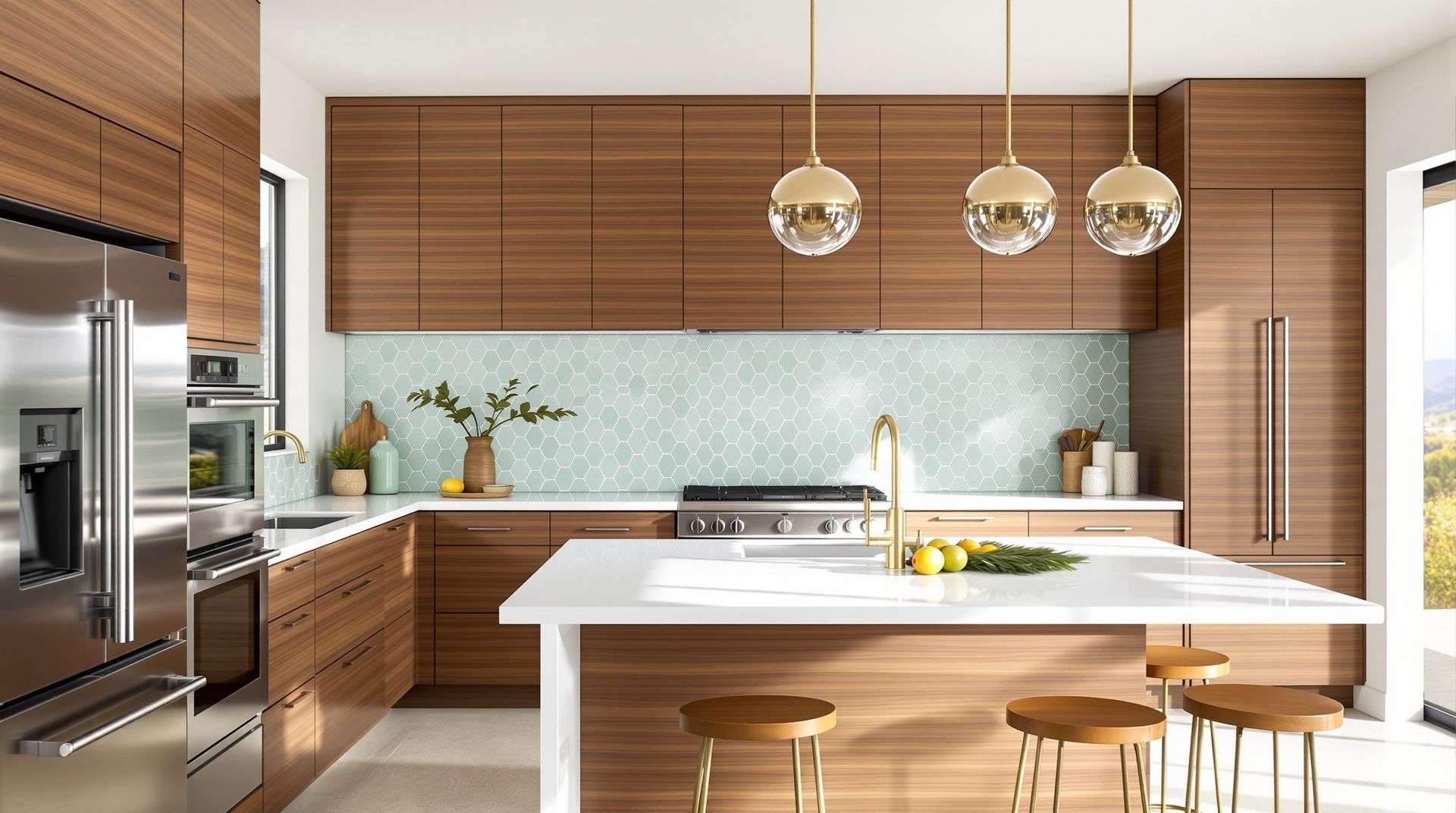
- Cabinetry: Flat-panel doors in walnut or oak give that classic mid-century warmth. If you prefer something modern, white oak with a light stain creates a soft, Scandinavian-inspired twist.
- Countertops: Quartz or terrazzo-inspired surfaces add subtle texture and durability. Quartz, in particular, mimics the speckled terrazzo look with far less maintenance.
- Hardware: Think brushed brass, matte black, or slim chrome pulls. These add polish without overpowering the design.
- Floors: Wide plank hardwood, cork, or even terrazzo-look tile ties everything together.
The best mid-century kitchens mix textures, wood against stone, matte against gloss, to create balance. The goal isn’t perfection. It’s creating a space that feels natural, layered, and lived-in.
Bring in Retro Color with a Modern Twist
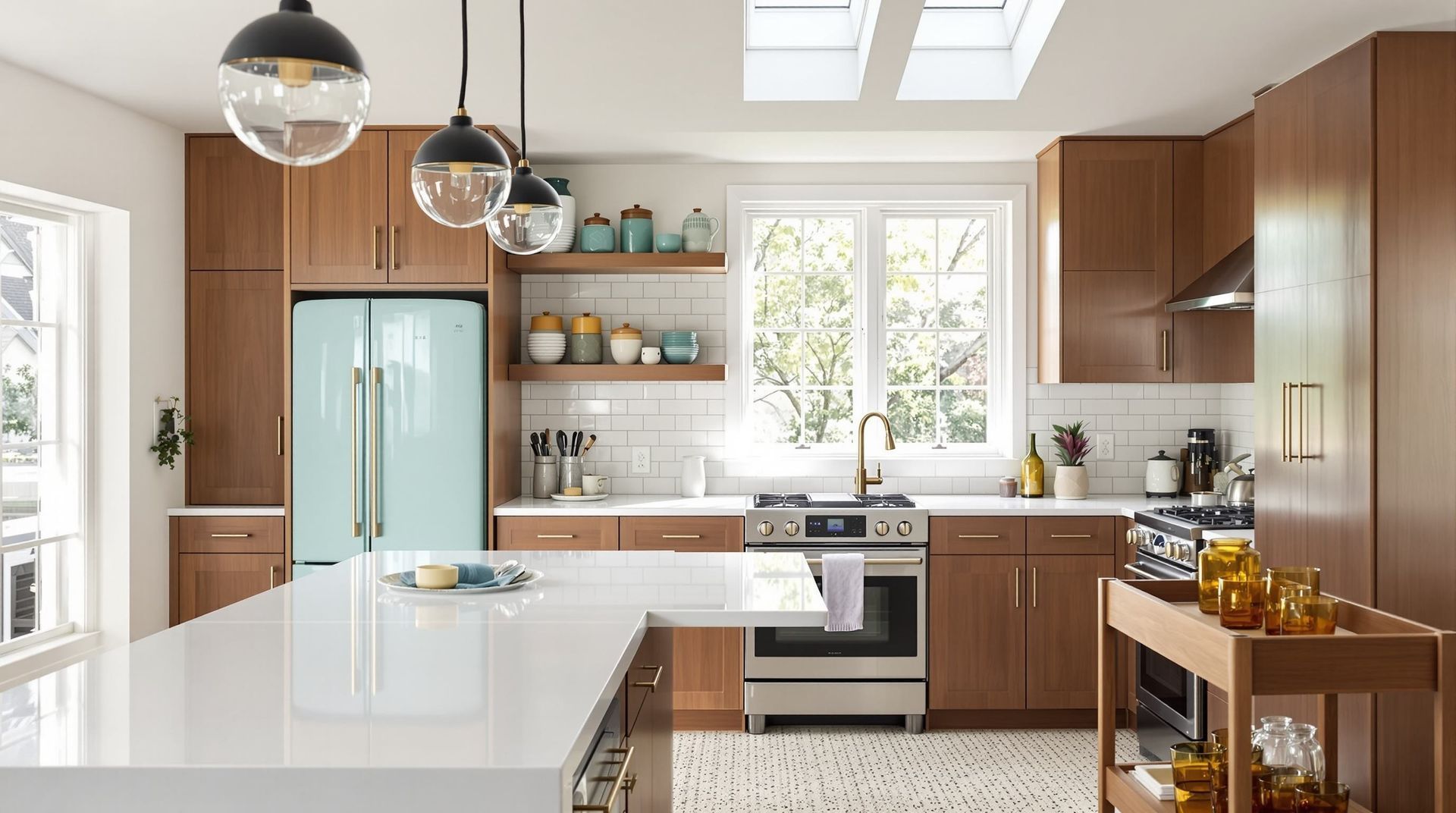
Color is where mid-century design has fun. Back then, bold hues like mustard, aqua, and avocado green were everywhere. Today, you can take that inspiration and tone it down for a softer, more timeless palette.
Try these combinations:
- Warm wood cabinets with sage or olive accents
- White walls with a splash of teal or coral
- Charcoal counters paired with brass hardware
You don’t need to commit to bright cabinets or flooring. Use color in smaller ways, a patterned backsplash, pendant lights, or even vintage-inspired bar stools. The idea is to create personality without overwhelming the space.
Lighting That Sets the Mood
Lighting can completely change how your kitchen feels. In mid-century design, it’s both functional and sculptural. You’ve probably seen the signature globe pendants or sputnik chandeliers that define the era.
Layer your lighting for balance:
- Task lighting: Under-cabinet strips or recessed lights for cooking areas.
- Ambient lighting: Pendants or ceiling fixtures that illuminate the room evenly.
- Accent lighting: Wall sconces or a statement piece above the island for style and mood.
Accessorize with Authentic Details
Once your main design choices are set, the smaller touches pull it all together. Open shelving, sleek stools, and vintage-inspired decor add a layer of personality. You might display a few mid-century ceramics or hang a piece of modern art with bold shapes.
A few easy ways to accessorize:
- Swap heavy cabinet handles for slim, horizontal pulls.
- Add greenery in simple ceramic planters.
- Use textured fabrics like linen or canvas for bar stools or window treatments.
And don’t forget function. A true mid-century kitchen balances beauty with purpose. Keep surfaces clear, storage smart, and details meaningful.
Why Mid-Century Style Works for Thousand Oaks Homes
Thousand Oaks homes have a unique advantage, many already carry mid-century bones. Wide windows, open layouts, and indoor-outdoor flow are key features of local architecture. Mid-century design builds on that, using materials and tones that echo the surrounding landscape.
Warm wood cabinetry connects beautifully with California’s natural light. Stone counters and subtle colors reflect the relaxed atmosphere of the region. It’s a look that fits effortlessly into the lifestyle here, easygoing, comfortable, and built to last.
If your home was built in the 70s or 80s, a few design updates can highlight what’s already there while giving it a fresh, timeless feel.
Partnering with the Right Design-Build Team
A remodel can feel like a big project, but with the right guidance, it doesn’t have to be overwhelming. A design-build team keeps everything under one roof, planning, design, and construction. This approach helps every detail work together, from the first layout sketch to the final cabinet handle.
When designers and builders collaborate, you get a kitchen that’s cohesive and thoughtfully planned. You can explore materials, lighting, and finishes with guidance instead of guesswork, making the entire process smoother and more enjoyable.
If you’re ready to bring your vision to life, take a look at our kitchen remodeling services to see how expert planning and craftsmanship can elevate your home.
Conclusion
Mid-century modern design is about more than style. It’s about creating a space that feels calm, comfortable, and built around real life. In a Thousand Oaks kitchen, that means pairing timeless design with everyday function, natural light, clean surfaces, and materials that feel good to the touch.
Start small if you want to test the waters. Update your lighting, swap out hardware, or refinish cabinets in a warm wood tone. Or, if you’re ready for something bigger, build a plan that brings it all together, the layout, the color palette, and the details that make the space uniquely yours.
Because when you walk into a kitchen that feels balanced and intentional, you notice it right away. It just works, beautifully, simply, and for years to come.